
The pages here are organised by meter family, and every page is a technical explainer: what a given meter family measures, the operating principle behind it, where it fits, and where it does not. Nothing on this site is for sale.
Start With the Measurement Principle
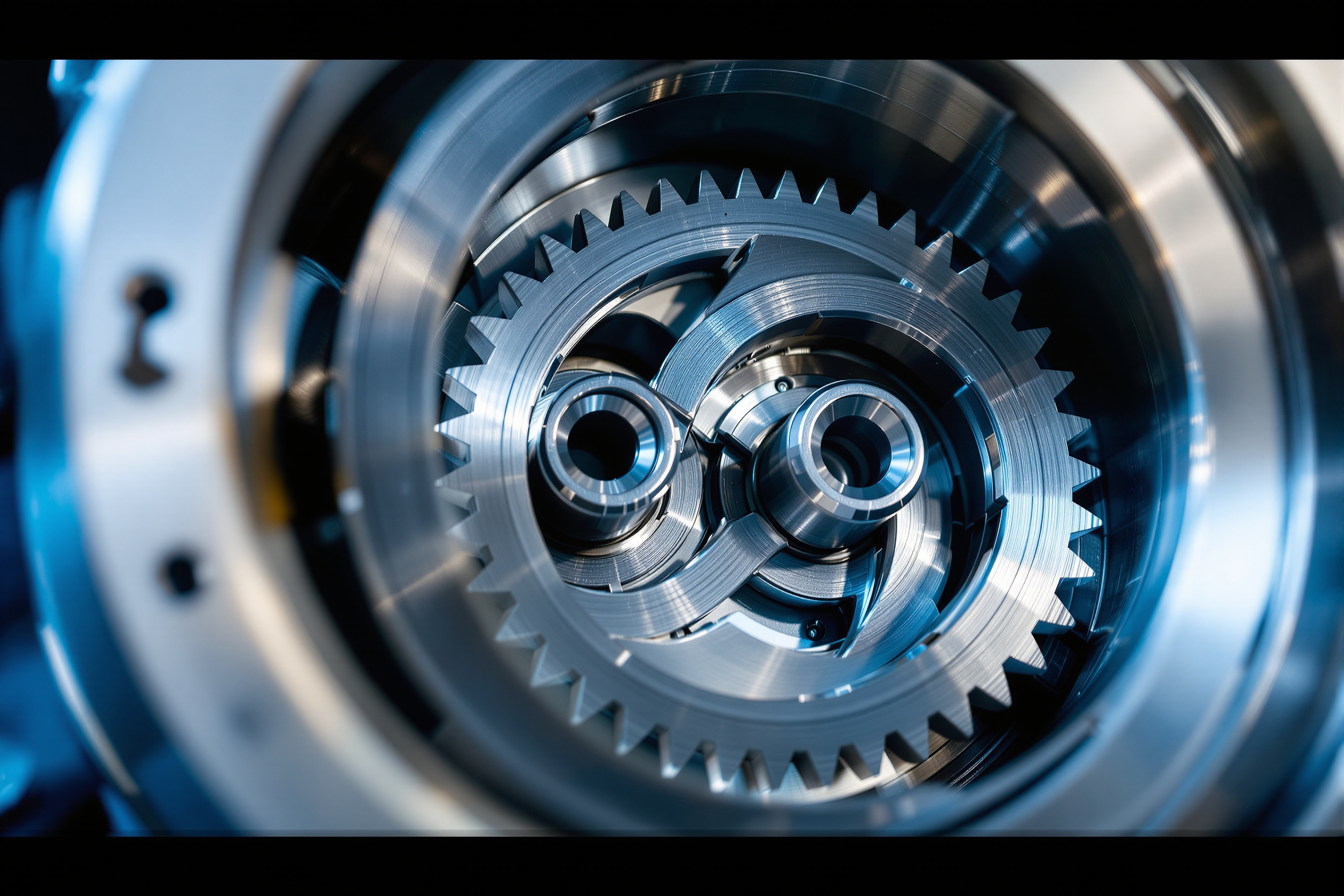
Every flow meter answers one of two questions: how much volume passed a point, or how much mass passed a point. From there, each technology exploits a different physical effect — a rotating chamber of known volume, a voltage induced in a moving conductor, the phase shift of a vibrating tube, the transit time of an ultrasonic pulse. Understanding that root principle is the fastest way to predict how a meter behaves with your fluid.
- Flow measurement principles — volumetric vs. mass flow, units, K-factor, turndown and Reynolds number.
- Flow meter types — a side-by-side tour of the major technologies and their trade-offs.
- Positive-displacement meters — the oval-gear and rotary-piston workhorses of fuel and oil metering.
- Electromagnetic meters — no moving parts, no pressure drop, for conductive liquids.
- Calibration and accuracy — accuracy classes, standards and traceability.
- Selection guide — matching a meter to fluid, viscosity, line size and duty.
Reference by Meter Family
Certain manufacturers became shorthand for a whole class of instrument. The brand hubs below describe the technology associated with each name — positive-displacement fuel meters, oval-gear meters, magnetic water and process meters — as neutral background, not as an endorsement or an offer.
- Tokico and Liquid Controls — rotary positive-displacement fuel and oil meters.
- Oval and Macnaught — oval-gear meters for viscous and clean fluids.
- Krohne — electromagnetic and process flow technology.
- Sensus — Woltmann and multi-jet water meters.
Why Getting the Meter Right Matters
A flow meter is rarely the most expensive item in a system, but a poorly matched one is one of the most expensive mistakes. An oversized meter loses resolution at normal flow; an undersized one throttles the process and wears out. A magnetic meter on a non-conductive hydrocarbon reads nothing at all. The standards bodies — the International Society of Automation (ISA) and the American Society of Mechanical Engineers (ASME) among them — publish the practice that keeps measurement honest. We reference that body of work throughout, so the guidance here reflects accepted engineering rather than marketing.
The other half of getting it right is documentation. A meter that was correct on the day it shipped is not necessarily correct today, and the only thing that closes that gap is a comparison against a better reference, written down. That is why this site treats calibration and accuracy as a first-class topic rather than an appendix: accuracy classes, measurement uncertainty and traceability are what turn a number on a display into a figure you can defend in a contract or an audit.
Use the navigation to jump to a principle, a meter type, or a specific family. Every page is written to stand on its own and to link back to the fundamentals it depends on.